Share Now:
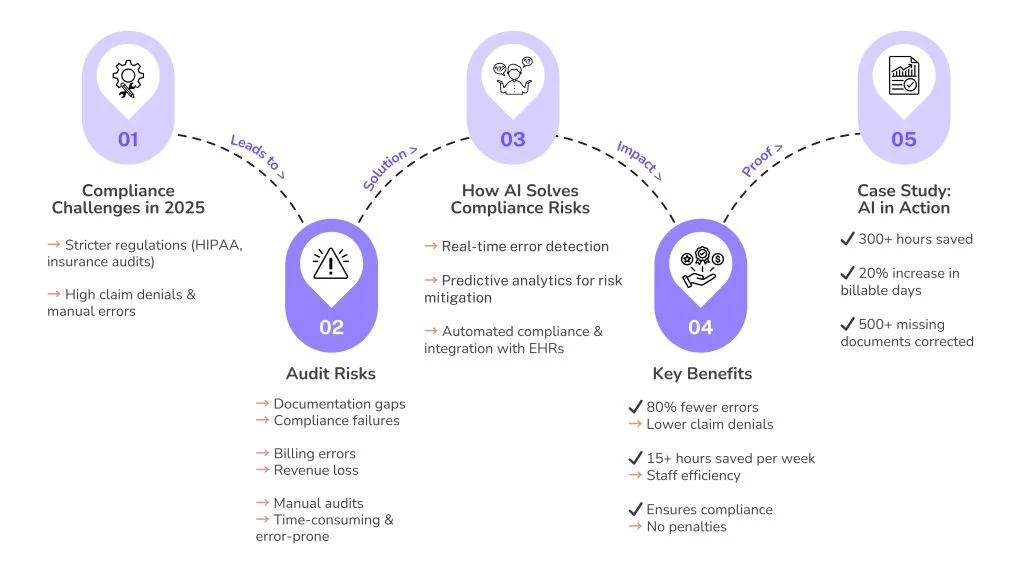
In 2025, all behavioral health clinics will face stricter compliance audits.
Will yours be ready for eliminating audit risks?
Compliance has always been a critical aspect of running a behavioral health clinic, but the regulatory landscape is becoming increasingly complex. As regulations tighten, clinics are struggling to keep up with documentation requirements, staff workloads, and the ever-present risk of audits.
The stakes are high: documentation errors, missed billing opportunities, and compliance failures can lead to severe financial penalties, loss of reputation, and operational inefficiencies.
Audits pose a major risk, and many clinics are finding it difficult to keep up due to several pain points:
However, technology is stepping in to transform compliance. AI-powered solutions are revolutionizing the way behavioral health clinics manage audits, reduce risks, and ensure documentation accuracy.
By eliminating audit risks, these AI tools help providers maintain regulatory compliance, minimize human errors, and focus more time on delivering quality care.
79% of companies are using or considering using AI to support compliance and risk management.
Binario Research’s AI Chart Audit solution is at the forefront of this change, helping clinics automate compliance checks, reduce human errors, and stay ahead of evolving regulations.
Regulatory requirements are tightening, and behavioral health facilities must be more prepared than ever.
The landscape in 2025 is shaped by several key trends:
Clinics that fail to keep up with these changes face common challenges, including:
With these mounting pressures, relying on traditional manual compliance processes is no longer a viable option.
Audit risks stem from multiple sources, including regulatory changes, manual errors, and documentation inefficiencies. Clinics can be audited for various reasons, such as:
The reality is that manual audits are inefficient and error-prone. Clinics relying on staff to review charts and compliance checklists often face:
Consider this: Clinics using manual audits spend over 15 hours per week on chart reviews. This is valuable time that could be dedicated to patient care, but instead, it’s lost in an inefficient system.
Failing to comply with regulations has real consequences. Clinics that fall short face:
AI-powered chart auditing is changing the game by automating compliance checks and eliminating human errors. But how does it work?
One of the biggest advantages of AI-driven audits is adherence to the Golden Thread in behavioral health documentation, which ensures that all patient records are consistent, complete, and compliant. AI systems continuously scan records for inconsistencies, preventing claim rejections and regulatory violations.
| Factor | Traditional Audits | AI-Powered Audits |
|---|---|---|
| Time Spent | 10–20 hours/week per auditor | Real-time, continuous auditing |
| Accuracy | Prone to human error (15–25% error rate) | High accuracy (reduces errors by up to 80%) |
| Compliance Risk | Higher risk of missed errors and regulatory penalties | Ensures real-time compliance and quick error detection |
| Cost | High labor costs due to manual work | Lower long-term costs with automation |
| Scalability | Limited by workforce availability | Easily scalable with growing patient volume |
| Claim Denials | Higher due to documentation errors | Reduces denials by up to 80% |
| Operational Efficiency | Slower process, delayed reporting | Fast insights, real-time corrective actions |
Clinics looking to integrate AI-powered audits should follow these steps:
Binario Research stands out because:

With tighter regulations in 2025, clinics adopting AI-powered compliance now will gain a major advantage. AI automates audits, reduces errors, and ensures smooth regulatory compliance—helping clinics avoid penalties and streamline operations.
Regulatory bodies like CMS, JCAHO, and CARF are enforcing stricter compliance rules. AI-driven audits:
Healthcare is rapidly adopting automation for compliance and revenue cycle management. Key trends:
AI-powered audits don’t just reduce admin work—they improve patient outcomes:
Clinics utilizing AI have reported significant reductions in administrative workload and increased time available for patient care.
| Factor | Manual Audits | AI-Powered Audits |
|---|---|---|
| Time Spent | 15+ hours/week | Real-time automation |
| Error Risk | High | Significantly reduced |
| Claim Denials | Approximately 30% | Up to 80% fewer denials |
| Compliance Costs | High | Cost savings through automation |
The future of compliance is AI-driven. Clinics that integrate AI now will not only reduce audit risks but also enhance patient care, increase financial stability, and stay ahead of evolving regulations. Waiting until compliance mandates force automation will only result in higher costs, greater risks, and lost revenue opportunities.
Don’t wait for the next audit – future-proof your clinic today.