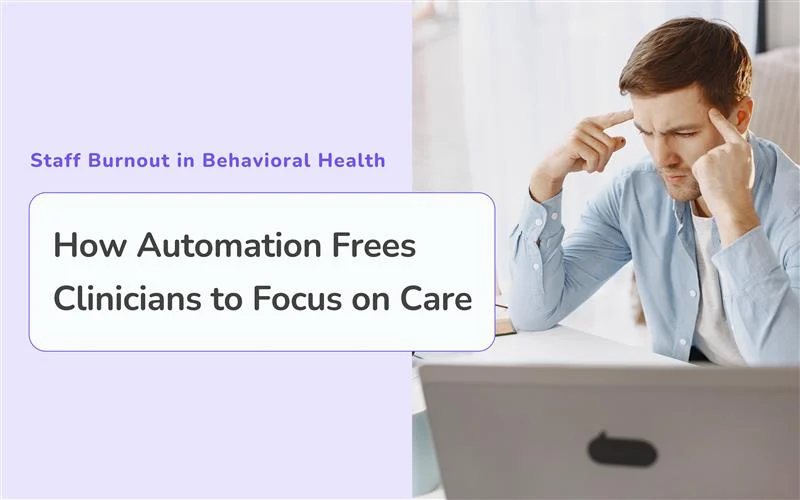
In behavioral health, clinician burnout is closely tied to the burden of administrative tasks. While the primary focus should be patient care, clinicians often find themselves spending more time on documentation, compliance, and operational processes than on delivering therapy. Automation offers a powerful solution to relieve these pressures, enabling behavioral health organizations to improve efficiency, reduce errors, and allow clinicians to focus on patient care.
A. Documentation & Auditing
In behavioral health, clinicians spend a considerable portion of their time documenting patient interactions to ensure compliance with regulations, treatment plans, and billing codes. In fact, many report that they often spend more time on documentation than with patients. This time-consuming task can lead to fatigue, stress, and errors in the documentation process, which directly impacts billing accuracy and compliance with frameworks like the Golden Thread.
How Automation Helps: Automation tools can drastically reduce the time clinicians spend on documentation by offering features that:
- Pre-fill routine fields: Automatically populate repetitive information like patient details, session types, and past treatment history, saving clinicians valuable time.
- Suggest improvements to notes in real-time: Using AI-driven tools, clinicians can receive suggestions for improving notes to ensure consistency and quality, reducing the chance of errors or missing critical information.
- Flag compliance gaps before audits: Automated tools that use AI to assist with chart audits can immediately identify missing or incomplete documentation, ensuring that everything aligns with billing and compliance standards, significantly reducing audit risks.
By automating chart audits and documentation processes, organizations can not only improve clinician well-being but also ensure that they meet regulatory standards with greater accuracy and efficiency.
B. Intake & Engagement Processes
The intake process in behavioral health is often fragmented and inefficient, relying on manual forms, back-and-forth emails, and delays that can frustrate both patients and staff. The process can take several days, increasing wait times and affecting patient satisfaction. For clinicians, this means spending more time on administrative tasks rather than focusing on patient care.
How Automation Helps: Automation can simplify key aspects of patient intake and engagement by:
- Automating intake forms: Patients can complete intake forms digitally before their appointment, allowing for quicker processing and reducing the manual data entry burden for staff.
- Tracking consent: Automation ensures that consent forms are completed and tracked accurately, helping maintain compliance with regulations.
- Sending patient reminders and follow-ups: Automated reminders for appointments, follow-up care, and pre-session preparation reduce the need for staff to handle routine communications, improving overall efficiency and reducing administrative workload.
Integrating CRM systems can centralize these processes, offering a smooth experience for both staff and patients while improving the speed to care and ensuring better patient retention.
C. Workflow & Case Management
Behavioral health organizations often struggle with managing complex workflows and case assignments, especially as patient needs grow more varied and complex. Without effective systems in place, clinicians may find themselves overwhelmed by overdue documentation, missed follow-ups, and urgent cases needing immediate attention. Automation in workflow and case management can ensure that the right tasks get to the right people at the right time, significantly improving organizational efficiency.
How Automation Helps: Automation can optimize workflow management by:
- Automatically sending appointment reminders: Ensure patients never miss appointments and reduce no-shows, freeing up clinician time for direct care.
- Routing overdue documentation to supervisors: Automatically alert supervisors when clinicians are behind on documentation, helping prevent backlog and ensuring compliance.
- Flagging urgent patients: Automated systems can help identify patients who need immediate intervention, allowing clinicians to prioritize care effectively.
By automating workflow management, organizations can reduce the likelihood of errors and delays, allowing clinicians to spend more time providing high-value care rather than managing logistics and administrative tasks.