
February 25, 2026/
No Comments
Billing in behavioral health is not always clean. Most of the time it looks fine on the surface but when someone actually...
Billing in behavioral health is not always clean. Most of the time it looks fine on the surface but when someone actually checks the charts closely, small gaps start showing up. And those small gaps can turn into denied claims or delayed payments.
One code that often causes trouble is h0018. It shows up in residential type care settings where services need strong documentation behind them. Not just notes but proper justification, progress updates and consistent records that actually make sense when someone reviews them later.
A lot of programs do not struggle because care is wrong. They struggle because documentation does not match what payers expect.
That is where a behavioral health chart audit tool starts to matter more than people think.
AI Chart Audit Tool by Binario Research helps teams clean up documentation before things go out for billing. It does not change clinical work. It just shows where the gaps are, especially around codes like h0018. Binario Research focuses on making that process less messy for teams that deal with heavy paperwork every day.
On paper, h0018 is a billing code used in residential behavioral health services. But in real life, it means something more stressful. It means every note has to connect properly. It means someone else should be able to read the chart and understand what is going on without guessing.
That sounds simple but it rarely happens perfectly.
One provider writes detailed notes. Another writes short updates. Someone else forgets to include progress details because they were busy with patients. It is normal human workflow stuff.
But payers do not look at it like that. They just see missing or weak documentation. And when h0018 documentation looks incomplete, claims get flagged or denied.
Sometimes the care was actually good. But the paperwork did not prove it properly. That is usually the real issue.
Most problems start with time pressure. Staff are focused on patients. Notes get written at the end of shifts or between tasks. Nobody is trying to do bad documentation. It just becomes rushed.
Then there is inconsistency. There is usually no single “perfect example” everyone follows. So each person develops their own style over time. That creates variation across records.
Another issue is training gaps. New staff often learn documentation by watching others. If the system is already inconsistent, that inconsistency continues.
And honestly, no one enjoys auditing charts manually. It takes time and still misses things when the workload is heavy.
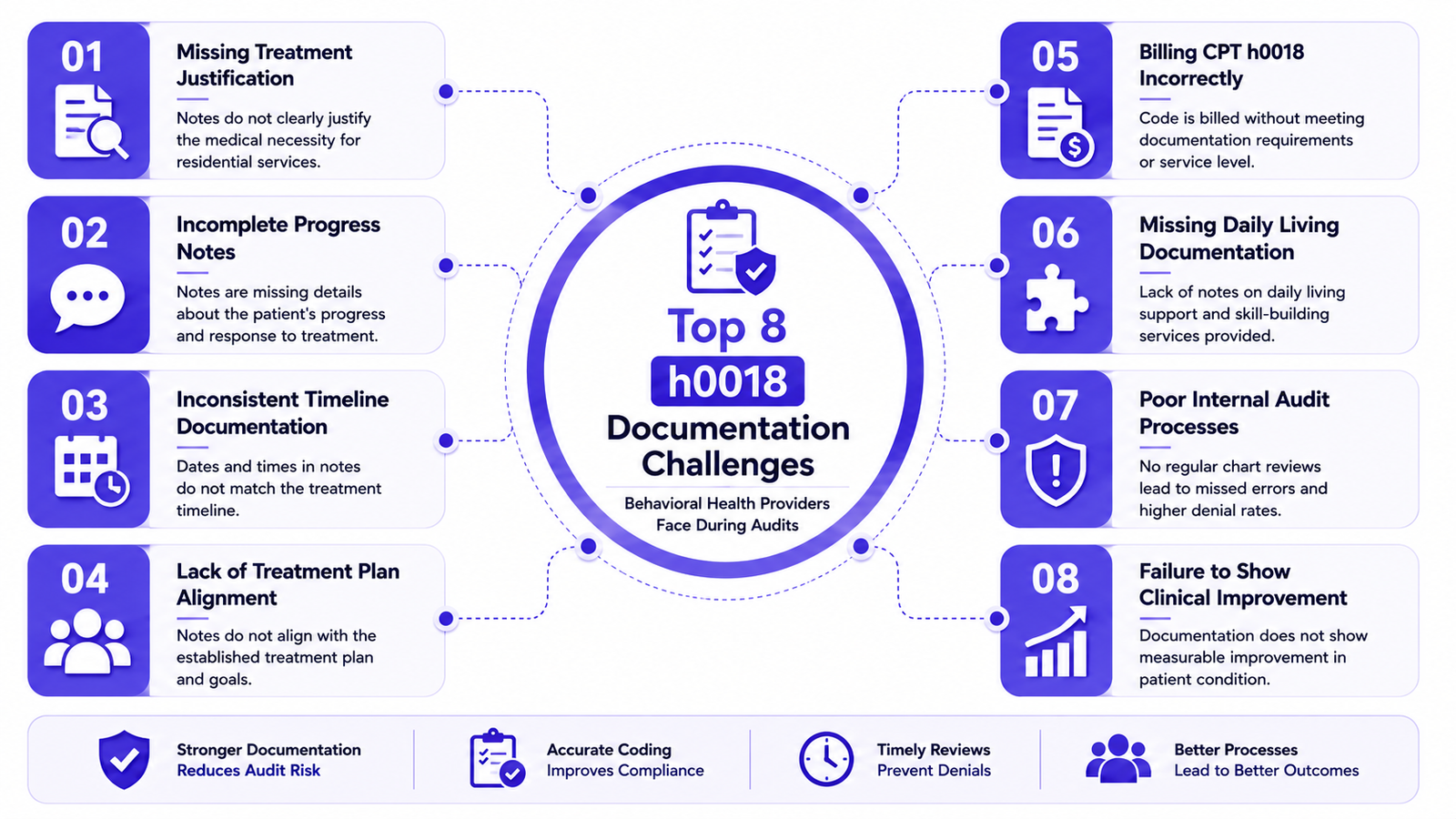
So when reviewers look at h0018 claims later, they often find missing justification or unclear progress notes. Sometimes even small missing details create big billing problems.
That is where frustration builds up because the care was there but the proof is weak.
A behavioral health chart audit tool does something simple but useful. It checks charts before they go out for billing. Not in a complicated way. It just scans documentation and compares it with what is expected for codes like h0018.
If something is missing, it flags it. If progress notes do not clearly show improvement, it gets flagged. If treatment justification is weak or unclear, it shows that too. If documentation does not stay consistent over time, it picks that up.
It does not judge the provider. It just points out what looks incomplete. That alone changes a lot of things. Because instead of finding out after denial, teams see issues early and fix them before submission.
The first thing people notice is fewer surprises. Before, billing teams would find out about problems after claims were rejected. Then they would go back, fix notes, resubmit and wait again.
With a chart audit system, that loop becomes shorter. Errors show up earlier, so corrections happen before submission.
Over time, documentation quality starts improving naturally. Not because someone forces it but because people start seeing patterns in feedback.
If a team keeps missing the same issue in h0018 documentation, they fix how they write notes in general. That slowly reduces repeat errors.
Another thing that changes is communication. Clinical teams and billing teams stop guessing. They actually see the same audit feedback, so they understand each other better.
It also reduces pressure on senior staff who usually end up doing last-minute corrections.
Some codes are easier because they do not need as much documentation depth. But h0018 is not like that. It sits in a space where payers expect detailed proof of care. That means small mistakes matter more.
A missing progress note, unclear treatment goal or inconsistent timeline can create issues. Even if everything else looks fine, one gap can slow down the whole claim.
That is why programs that use structured auditing usually perform better with this code. It is not about perfection. It is about catching enough mistakes early so claims do not fall apart later.
Good h0018 documentation is not about writing more words. It is about clarity. It should show what treatment is happening, why it is needed and how the patient is responding over time.
It should not feel random. There should be a flow from one note to the next. But in real environments, notes often feel disconnected. One day looks detailed, the next day feels short and the next day misses context.
That inconsistency is what auditors notice first. A chart audit tool helps reduce that gap by showing where documentation breaks flow or misses required points.
People usually think audit tools are only for billing. That is not fully true. Yes, they help with revenue. Fewer denied claims means better cash flow. But there is another layer.
They help teams understand their own documentation habits. They show patterns that are hard to notice manually. Over time, this builds a more stable system.
That matters even more now because behavioral health systems are already under pressure. A recent HHS report noted that nearly half of Americans will experience a behavioral health condition at some point in their lifetime, which continues to increase demand for behavioral health services and documentation workflows.
Programs become less reactive. Less fixing errors at the last minute. And for codes like h0018, that stability matters a lot because the requirements are strict and repetitive.
Behavioral health work already has enough pressure. Documentation should not add more stress than necessary.
When teams rely only on manual checks, errors slip through. Especially with something like h0018, where details matter more than people realize.
A behavioral health chart audit tool does not replace human work. It just supports it in a practical way. It catches what gets missed in daily rush and keeps documentation closer to what payers expect.
When systems like those from Binario Research are used properly, teams usually see fewer denials and smoother billing cycles over time.
Not overnight. But gradually things start getting more stable. And that is usually the real goal.
Billing in behavioral health is not always clean. Most of the time it looks fine on the surface but when someone actually...
Behavioral health billing gets messy pretty fast once claims start getting denied. A lot of times people assume the treatment itself...
Behavioral health organizations already have too much going on most days. Staff answer calls while finishing notes. Someone asks for...