
February 25, 2026/
No Comments
Billing in behavioral health is not always clean. Most of the time it looks fine on the surface but when someone actually...
Behavioral health organizations already have too much going on most days. Staff answer calls while finishing notes. Someone asks for records. Another person follows up on billing. Things keep moving the whole day and paperwork usually gets rushed somewhere in between.
That is one reason documentation problems happen so often.
When providers bill services using the h0025 code the records need to back up the service properly. If the paperwork looks incomplete or unclear the claim can get denied. Sometimes payers ask for more information later. Sometimes organizations do not even realize there is a problem until an audit happens.
A lot of people think prevention or education services do not need detailed documentation. That idea causes trouble later because payers still expect proper charting.
That is where AI chart audits help. They give organizations a chance to catch mistakes before those mistakes turn into denied claims or compliance headaches.
The h0025 code relates to behavioral health prevention and education services. Different organizations may use it for things like:
Even though these services sound simple, the paperwork behind them still matters a lot. According to NIMH, about 57.8 million people experience mental illness each year which is why prevention and education services are widely used in behavioral health programs.
Usually documentation should show:
If some of that information stays missing the organization may run into billing problems later.
Most of the time staff are not trying to document badly. Work just gets chaotic.
One provider finishes notes late because appointments ran over. Another person writes very short summaries because they still have five more charts left before leaving. Sometimes people use different wording for the same service and nobody notices till much later.
That kind of thing happens all the time in behavioral health settings.
Some organizations also still rely on outdated systems. Slow workflows frustrate staff. Notes get delayed. Small details get skipped because everybody feels rushed already.
Then eventually the organization starts seeing denied claims connected to h0025 billing.
Chart audits are basically reviews of records and billing documentation. Teams look through charts to check if everything matches correctly.
The main goal is simple. Find problems early instead of finding them during an external audit.
A decent audit process can help organizations:
Sometimes audits also show patterns, leadership did not notice before. Maybe one department struggles with late notes. Maybe newer staff need more training. Maybe certain forms confuse everybody.
Without reviews those issues usually keep repeating.
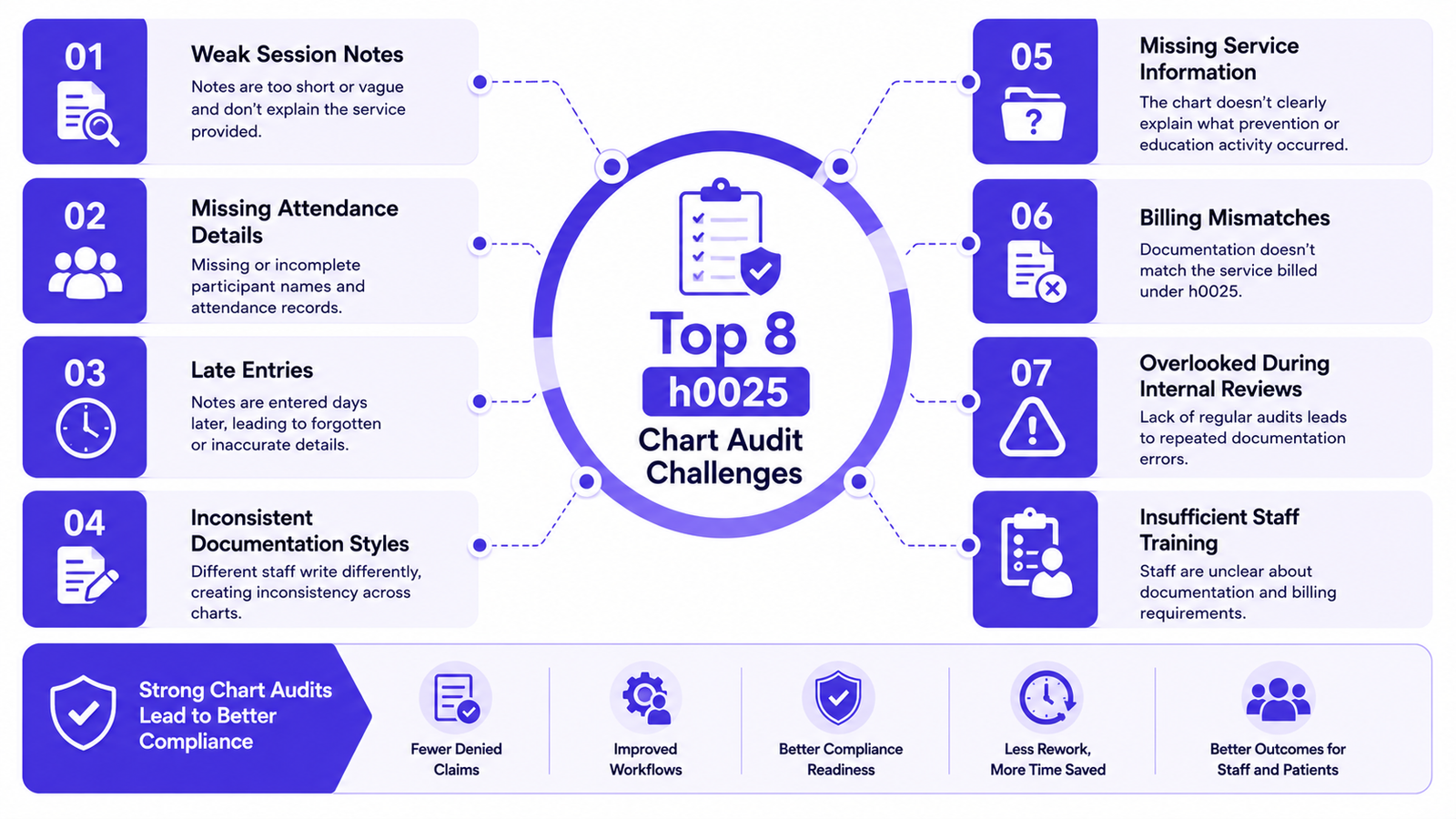
Some charting mistakes appear again and again in behavioral health records.
Very short notes create issues fast. Writing “attended education session” does not explain much about the service provided.
Group services often need clear participant records. Missing names or attendance details can weaken claim support.
Waiting several days to finish notes usually leads to forgotten details. That creates confusion during reviews.
One staff member writes detailed notes while another writes two lines. That inconsistency makes audits harder.
Sometimes charts fail to explain what education or prevention activity actually happened.
Small mistakes may not seem serious at first. Still repeated errors can create larger compliance problems over time.
Denied claims waste a surprising amount of time.
Administrative staff have to reopen records, fix mistakes, resubmit paperwork and communicate with payers again. That process slows everything down.
Meanwhile regular daily work keeps piling up in the background.
Repeated documentation issues may also trigger deeper reviews from payers. Most organizations want to avoid that situation completely.
Strong chart audits help reduce those risks before things become bigger problems.
Some organizations only pay attention to documentation when an external audit shows up. By that point fixing problems becomes stressful.
Internal reviews make things easier because they help teams stay ahead.
Regular chart checks can help organizations:
Sometimes audits also reveal operational problems nobody talked about before. Maybe workloads are unrealistic. Maybe training never really happened properly. Maybe staff are unsure about billing expectations.
Reviews bring those problems to the surface.
Many behavioral health organizations now use audit software or chart review systems. Those tools can definitely help especially for larger teams handling a lot of records.
They often help identify:
That support saves time.
Still software cannot completely fix poor charting habits. Staff still need training and clear expectations.
Good systems only work properly when people understand how documentation should look in the first place.
A lot of providers are good at patient care though documentation may not come naturally to them. That does not mean they are careless. Usually nobody explained billing documentation properly.
Some workplaces barely train employees on charting standards. Staff mostly learn while working under pressure.
Organizations should regularly go over:
Even short training sessions can improve chart quality quite a bit.
Clear communication helps too. People usually document better when expectations actually make sense.
Organizations sometimes focus heavily on software while ignoring daily documentation habits.
Simple habits usually help the most:
None of those things sound complicated. Still busy workdays make them harder than they should be sometimes.
That is why regular audits still matter so much.
Good compliance work is not only about avoiding penalties or failed audits.
Cleaner documentation also helps organizations operate better overall. Billing moves smoother. Administrative staff spend less time fixing mistakes. Teams feel less overwhelmed by paperwork problems.
The h0025 code focuses on education and prevention services though the documentation still needs to hold up during reviews.
Every chart should clearly support the billed service. If records stay weak or incomplete organizations may struggle later during payer reviews.
Chart audits play a pretty important role in h0025 billing compliance even though many organizations overlook them at first.
They help teams catch documentation problems early, improve consistency and reduce unnecessary billing issues before those issues grow larger.
Most charting mistakes happen because people feel rushed or overloaded not because they do not care. Still incomplete documentation can create expensive problems later.
That is why regular reviews matter.
They help behavioral health organizations stay prepared instead of scrambling to fix things after claims start getting denied.
Billing in behavioral health is not always clean. Most of the time it looks fine on the surface but when someone actually...
Behavioral health billing gets messy pretty fast once claims start getting denied. A lot of times people assume the treatment itself...
Behavioral health organizations already have too much going on most days. Staff answer calls while finishing notes. Someone asks for...